


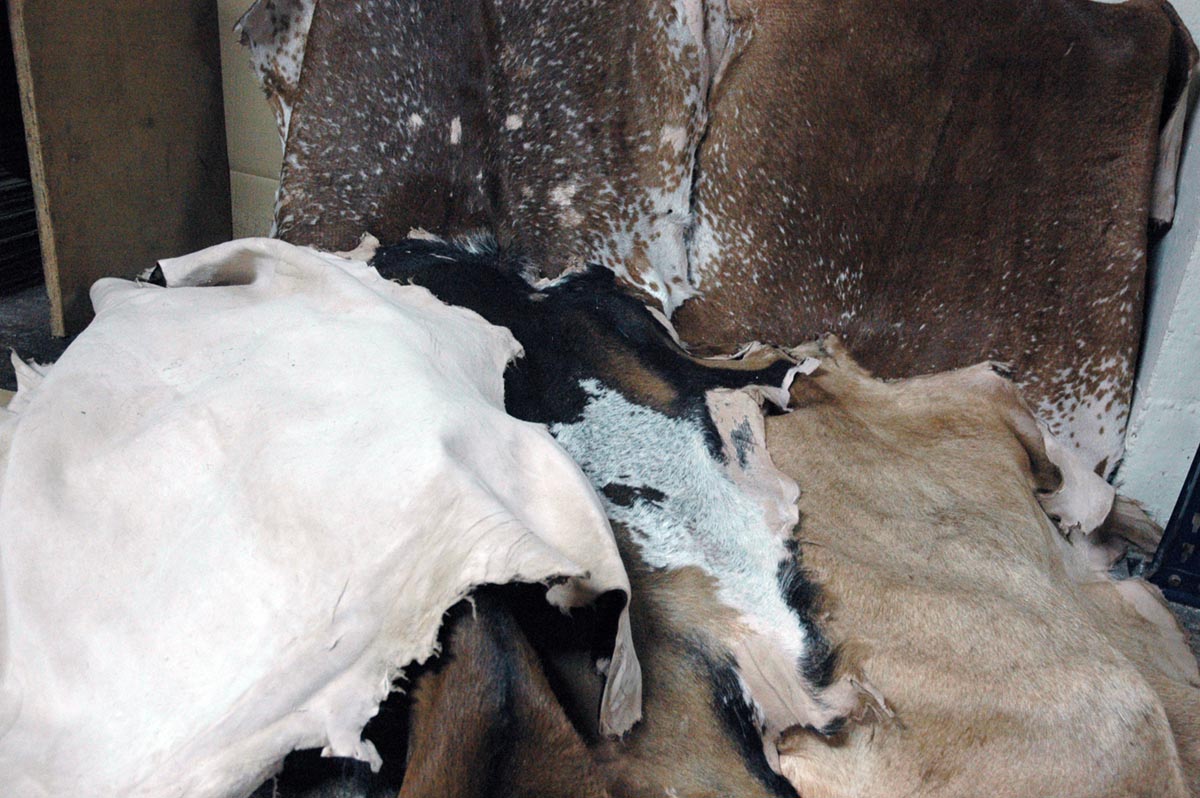
Vegetable-Tanned Goatskin: The Heart of Our Traditional Wineskins
At Las Tres ZZZ, we are proud to say that 100% of our leather wineskins —whether fitted with a fish-skin or latex lining— are handcrafted using premium, blemish-free goatskin, vegetable-tanned using traditional methods.
This choice represents a key differentiating factor in our commitment to guaranteeing the highest quality wineskins.
To fully understand this commitment, it is important first to explain what leather tanning is. Tanning is the process of transforming raw goatskin into a durable and resistant material, commonly known as leather. This process stabilizes the collagen in the hide, preventing its natural decomposition.
What Is Vegetable Tanning?
Historically, vegetable tanning has relied on plant extracts rich in tannins—natural acidic compounds that stabilize the leather while giving it color, firmness, and character.
Today, this traditional method is increasingly being replaced by faster chemical tanning processes, especially chrome tanning.
Vegetable tanning is the oldest and most environmentally friendly tanning method, but also the slowest and therefore the most expensive. The hides must remain immersed in wooden drums filled with water and tannins for up to 60 days to achieve the desired result.
The resulting leather has a natural appearance, a soft texture, and excellent breathability.
Chrome Tanning vs. Vegetable Tanning
Chrome tanning, on the other hand, uses chromium salts, a heavy metal that significantly accelerates the tanning process, reducing it to just a few days and lowering production costs.
However, chrome-tanned leather tends to have a more uniform appearance, a stiffer texture, and reduced breathability compared to vegetable-tanned leather. It is also potentially toxic and highly polluting.
Why We Choose Vegetable-Tanned Leather
At Las Tres ZZZ, we firmly stand by vegetable tanning despite its higher cost and longer production times, and we do so for good reasons:
- Vegetable-tanned leather is environmentally friendly and safe for human health, as it does not produce hazardous waste or cause allergic reactions.
- It preserves the natural characteristics of the goatskin—pores, wrinkles, and marks—giving each wineskin a truly artisan and unique character.
- It ages beautifully, developing a natural patina over time that enhances the beauty and personality of well-aged wineskins.
Maintaining our commitment to vegetable tanning inevitably makes our production slower and more expensive, and it also depends on the limited availability of the finest raw materials.
Craftsmanship Above All
Another challenge of vegetable tanning lies in the greater difficulty of handling and working with naturally tanned leather.
This challenge demands exceptional skill and expertise from our artisans—a level of craftsmanship that we strive to deliver in every wineskin we create, so our customers can truly enjoy products made with care, tradition, and mastery.